Merthy: The Handwritten Script Font That Elevates Your Brand Identity
I still remember the moment I realized my brand needed a refresh. I was sitting at my kitchen table, surrounded by half-finished packaging prototypes for my new line of hand-poured soy candles. The labels looked clean, but they felt cold. They lacked soul. I had been using a standard sans serif font because it was easy to read, but as I held up a jar next to a handwritten thank-you note I’d given to a friend, the difference was stark. One felt like a factory product; the other felt personal, crafted, and special. That’s when I started looking for a typeface that could bridge the gap between professional polish and human warmth.
That search led me to Merthy, a stunning handwritten script font created by madeDeduk. It wasn’t just about finding a "pretty" font; it was about finding a visual voice that matched the care I put into every single candle. Merthy is part of the Script Amp category of Fonts, and from the moment I opened the file, I knew it was the missing piece of my brand puzzle. It’s not just a font; it’s a design asset that brings immediate personality to any project.
Why Typography Matters More Than You Think
For small business owners, we often focus on product quality or customer service, which are obviously vital. But in the digital age, your typography is often the first thing a potential customer sees. Before they smell the scent or touch the texture, they see your logo, your Instagram post, or your website banner. This is where brand identity truly takes shape.
Typeface choices affect first impressions instantly. A rigid, geometric font might signal efficiency and modernity, while a flowing script can suggest elegance, creativity, and approachability. When you choose a premium font like Merthy, you are signaling to your audience that you pay attention to detail. It builds trust. It makes your business look established and thoughtful rather than makeshift. In a crowded marketplace, those subtle cues are what make a customer pause and engage.
The Personality of Merthy
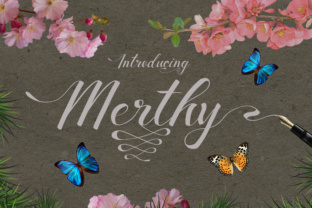
Merthy isn’t trying to be perfect. It’s trying to be real. As a handwritten script, it carries the natural imperfections of ink on paper. It has a casual, breezy energy that feels friendly without being unprofessional. It’s versatile enough to work for a high-end boutique but also fits perfectly with a cozy café menu or a handmade jewelry shop.
What really sets Merthy apart is its character. It doesn’t feel like a computer-generated imitation of handwriting; it feels authentic. The curves are smooth, and the connections between letters flow naturally. This makes it incredibly effective for short phrases, headlines, and logos where you want to capture attention quickly. It’s a creative font that adds an editorial flair to your designs, making even simple text look curated.
Real-World Applications for Small Businesses
Since switching to Merthy, I’ve found endless ways to use it across my business materials. Here is how I’ve integrated it into different areas of my brand:
- Packaging Design: On my candle jars, I use Merthy for the product name. It looks beautiful embossed or printed on kraft paper, giving the product a artisanal feel right off the shelf.
- Social Media Graphics: For Instagram templates, I pair Merthy with clean backgrounds. It works beautifully for quotes, sale announcements, or new arrival headers. It stops the scroll because it feels personal.
- Thank-You Cards: There is something deeply satisfying about printing a "Thank You" message in a script font. It mimics the act of writing by hand, which enhances the customer experience and encourages repeat purchases.
- Business Cards: Using Merthy for my name on a minimalist card creates a striking contrast. It establishes authority while remaining approachable.
- Website Banners: For hero sections on my online shop, Merthy serves as an excellent display font. It draws the eye immediately to the main call-to-action.
It’s not limited to candles, of course. Imagine this font on a bakery box for cupcakes, adding a touch of sweetness to the branding. Or on a skincare label, where it conveys natural ingredients and gentle care. For a beauty brand improving social media visuals, Merthy can turn a flat lay photo into a magazine-worthy graphic. Even a coaching brand can use it for motivational quotes, making the advice feel more intimate and direct.
Readability and Practical Usage Tips
While Merthy is gorgeous, there are practical considerations to keep in mind. Like most script fonts, it shines best as a headline or display text rather than body copy. Trying to write long paragraphs in Merthy will likely result in readability issues, especially on mobile screens or small product mockups.
For supporting typography, I recommend pairing Merthy with a clean sans serif font. This combination is timeless. The sans serif provides structure and legibility for details like pricing, ingredients, or descriptions, while Merthy provides the emotional hook. An elegant serif font can also work well if you are aiming for a more classic, luxurious aesthetic. Modern typography styles often rely on this contrast between decorative scripts and utilitarian block letters.
When designing for small labels, such as stickers or tags, ensure the text size is large enough. The intricate details of the script can get lost if scaled down too much. Always test your design in black and white first to check contrast before adding colors. This ensures that your brand remains recognizable whether it’s viewed on a dark background or a light one.
Technical Details and Licensing
One of the things I appreciate most about Merthy is the value packed into the package. It comes with more than 350 glyphs, which means you have plenty of alternates and ligatures to play with. This variety allows you to customize the look of your text, avoiding repetition and adding unique touches to your designs. Whether you need special characters for multilingual support or just want to tweak the flow of a word, having these options is invaluable.
Before purchasing, always check the included styles and file formats. Most modern fonts come in OTF and TTF formats, ensuring compatibility with major design software like Adobe Illustrator, Photoshop, Canva, and Affinity Designer. Additionally, understanding the commercial font licensing is crucial. If you plan to use Merthy on products for resale, merchandise, client work, or digital downloads, make sure you have the appropriate license. This protects both you and the designer, madeDeduk, and ensures ethical use of design assets.
Building a Consistent Visual Language
Consistency is key to building a memorable brand. By sticking to Merthy for all your primary headings and logo elements, you create a visual thread that ties everything together. When a customer sees that specific script on your packaging, your email newsletter, and your Facebook ad, they recognize your brand instantly. It reduces cognitive load for the buyer and makes your business feel larger and more cohesive than it might actually be.
Moving away from generic, system-installed fonts to a specialized typeface like Merthy was one of the best decisions I’ve made for my small business. It didn’t cost a fortune, but the return in perceived value was significant. It helped me transition from looking like a hobbyist to looking like a serious entrepreneur. If you are ready to elevate your brand visuals, take a close look at Merthy. It might just be the spark your business needs to stand out.